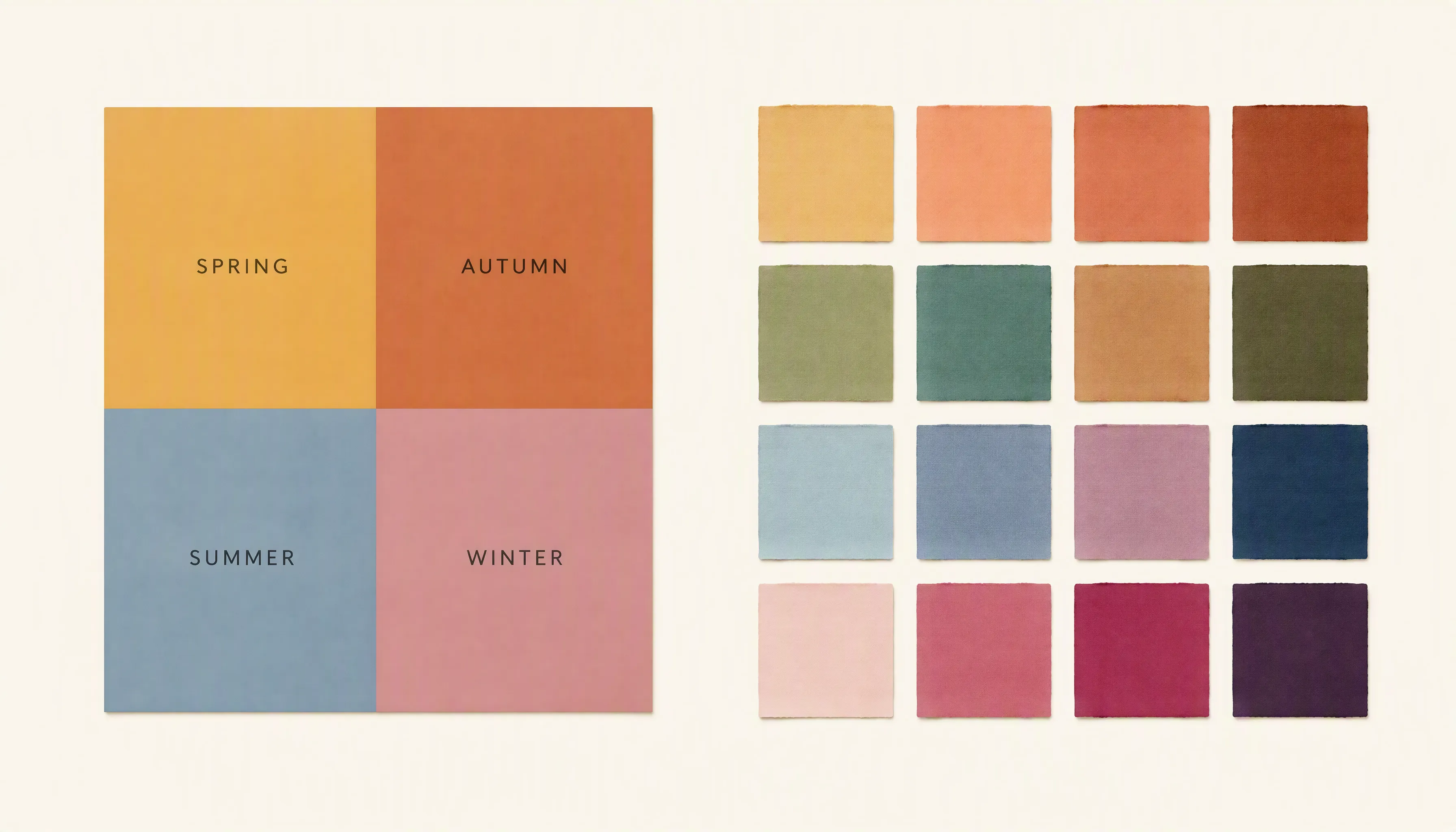
In 1980, Carole Jackson published Color Me Beautiful and introduced most of the English-speaking world to seasonal colour analysis. Her system had four seasons: Spring, Summer, Autumn, Winter. Within a decade, analysts were already extending it.
Today the dominant professional system uses twelve seasons. TikTok has introduced sixteen. Some practitioners use eight. The proliferation is confusing, and most people asking "what's my season?" don't know which system they're even being asked about.
Here is a clear explanation of what the 4-season and 12-season systems actually do, what each one tells you, and which one you need.
The 4-Season System: Temperature and Depth
Carole Jackson's original system classifies people on two axes:
Temperature: are you warm-undertoned (skin has a golden, peachy, or yellow-olive base) or cool-undertoned (skin has a pink, blue-violet, or beige-cool base)?
Depth/Value: is your overall colouring light or deep?
These two axes produce four categories.
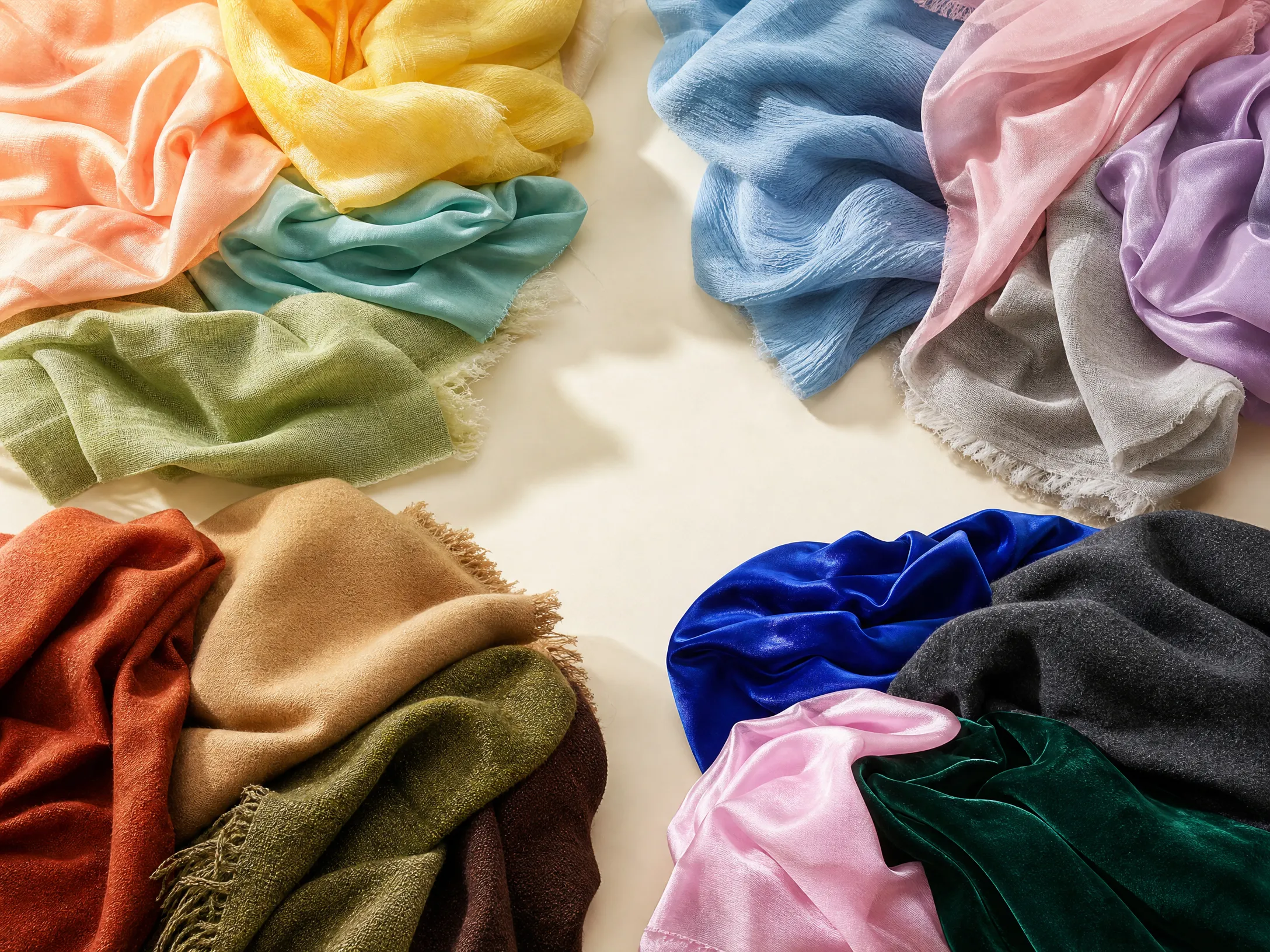
The 4-season system is useful. It correctly identifies your temperature family and gives you a broad palette that will always be an improvement over random colour choices. Most people who follow their 4-season guidance look noticeably better than before they had any analysis.
The problem is that it is not precise enough for many people.
The Gap the 4-Season System Leaves
Consider two people who are both classified as "Autumn" by the 4-season system:
Person A: Warm olive skin, very dark brown near-black hair, deep warm brown eyes. Overall colouring is rich, deep, and earthy.
Person B: Fair peach skin, strawberry blonde hair, warm hazel eyes. Overall colouring is light, warm, and clear.
Both are warm-undertoned. Both could technically be called "Autumn" by the 4-season system. But their palettes should look almost nothing alike. Person A suits the deep, richly saturated end of the warm range — forest greens, dark chocolate, burnt orange. Person B suits lighter, clearer warm colours — peach, warm camel, turquoise.
Giving them both the same Autumn palette produces mediocre results for both.

The missing variable is chroma: how vivid or muted, how saturated or greyed, your colouring is. The 4-season system does not measure chroma.
The 12-Season System: Adding Chroma
The 12-season system adds a third axis: chroma (also called saturation, clarity, or intensity).
Each of the four seasons is divided into three sub-seasons based on chroma:
Spring: Light Spring · True Spring · Bright Spring
Summer: Light Summer · True Summer · Soft Summer
Autumn: Soft Autumn · True Autumn · Deep Autumn
Winter: True Winter · Bright Winter · Deep Winter
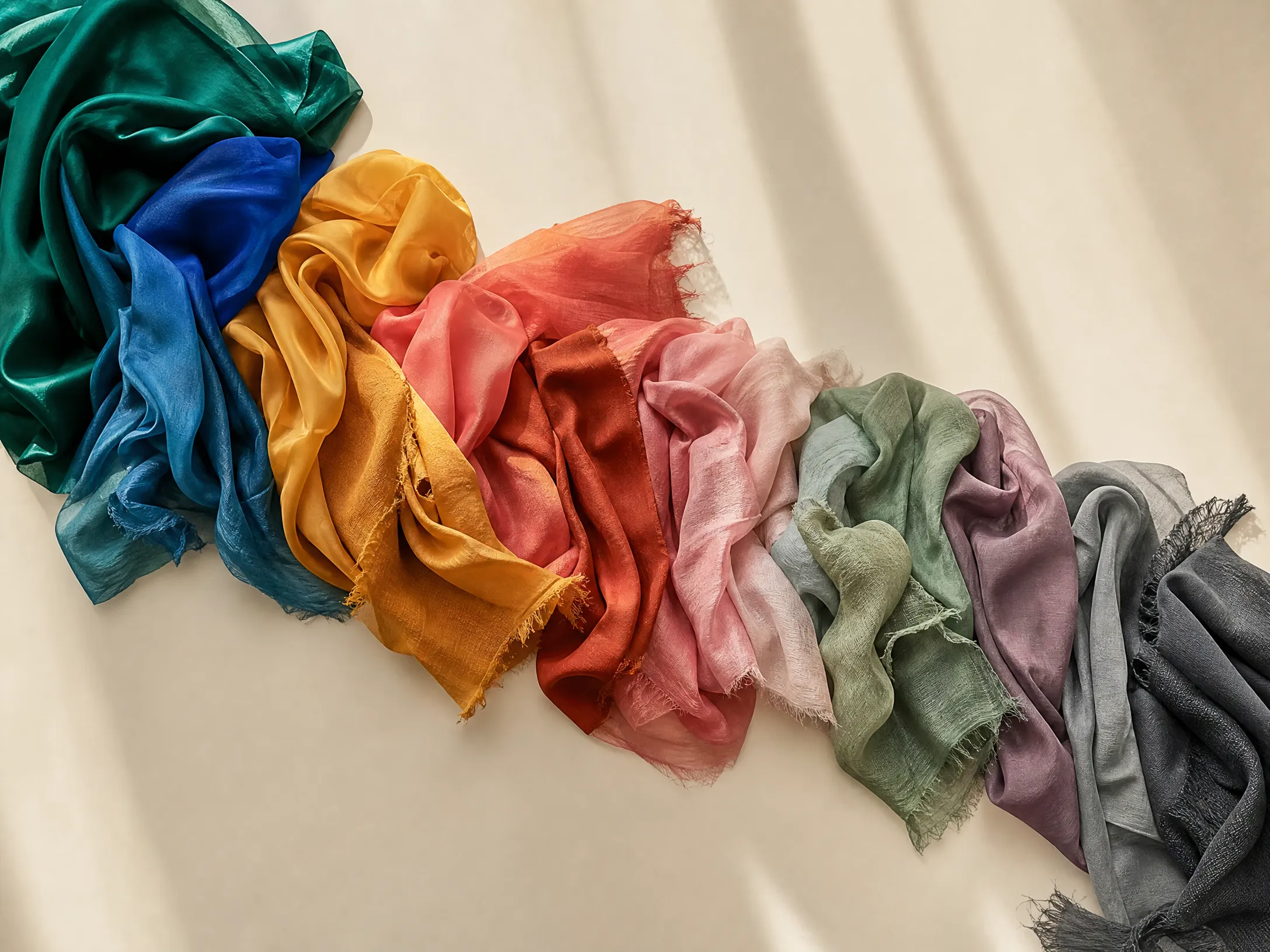
The sub-seasons at the edges of each family — Bright Spring and Bright Winter, Soft Summer and Soft Autumn, Deep Autumn and Deep Winter — share qualities across temperature lines. A Bright Spring and Bright Winter both have high chroma and clarity; the difference is entirely in undertone (warm vs cool).
What the 12-Season System Gives You That the 4-Season Doesn't
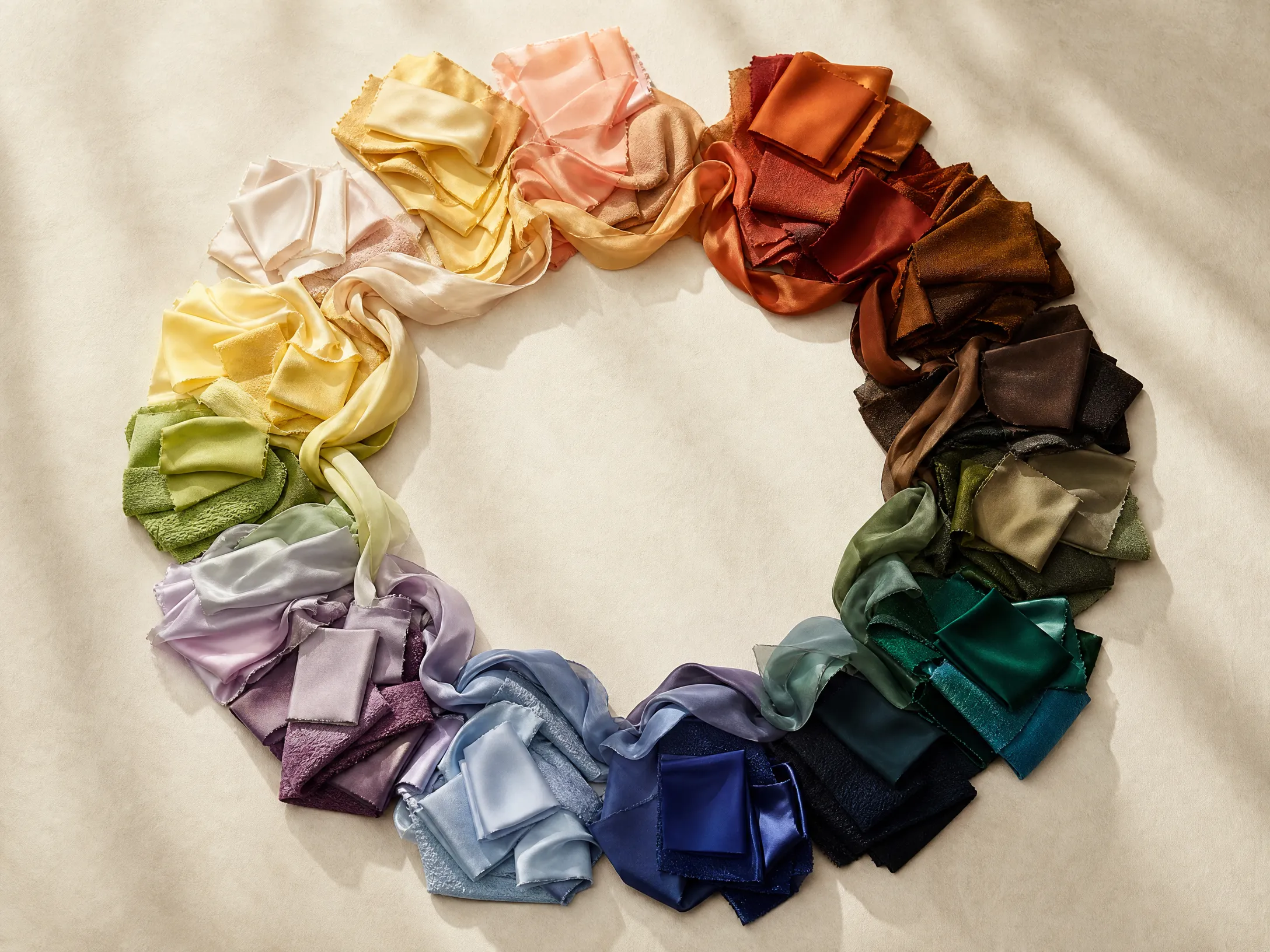
A specific palette rather than a broad category. Each sub-season has its own precise colour palette — typically 40–60 colours — calibrated to that specific combination of undertone, depth, and chroma. Two people in different sub-seasons of the same main season will have largely non-overlapping palettes.
Clarity about chroma-sensitive choices. The 4-season system doesn't tell you whether you suit vivid jewel tones or muted, dusty colours. The 12-season system does. This affects every category: clothing, makeup, hair colour, accessories.
Better guidance for the middle range. The 4-season system works best for people at the extremes. For people with neutral undertones, medium depth, or soft colouring, the 4-season categories can feel like they almost-but-don't-quite fit. The 12-season system has sub-seasons specifically designed for these neutral and muted cases.
Which System Should You Use?
The 4-season system is the right starting point if you have never done colour analysis before, if you want a quick, usable result, or if you are unsure of your undertone and need to establish temperature before going further.
The 12-season system is the right system if you want a precise palette, if you find your 4-season result only partially works for you, or if you are making specific decisions — building a wardrobe, choosing hair colour, buying makeup — where precision matters.
In practice, the 12-season system is the standard for professional colour analysis today. The 4-season system is useful as an introduction, but most people who engage seriously with colour analysis end up at the 12-season level eventually.

What About 16-Season Systems?
Some practitioners and tools have extended to sixteen seasons by splitting the twelve further. The additional precision is real but marginal. The visual differences between adjacent 12-season palettes are already subtle; the differences within a further subdivision are often too fine to be practical for wardrobe decisions.
The 12-season system is the practical ceiling for most people. Beyond that, the precision of the system exceeds the precision of most purchasing decisions.
The Bottom Line
The 4-season system tells you which family you belong to. The 12-season system tells you your actual palette. For most people, the 4-season result is a useful first answer that gets refined into a 12-season result once they understand the third dimension — chroma.
If your 4-season result has always felt like it partially works but not completely, chroma is almost certainly the missing piece.
→ Get your 12-season result at inmycolors.com
The 4-season colour analysis system was introduced by Carole Jackson in Color Me Beautiful (1980). The 12-season extension was developed independently by multiple practitioners, most comprehensively by Kathryn Kalisz through the Sci/ART method.